Surrey Office Redesign
The Brief:
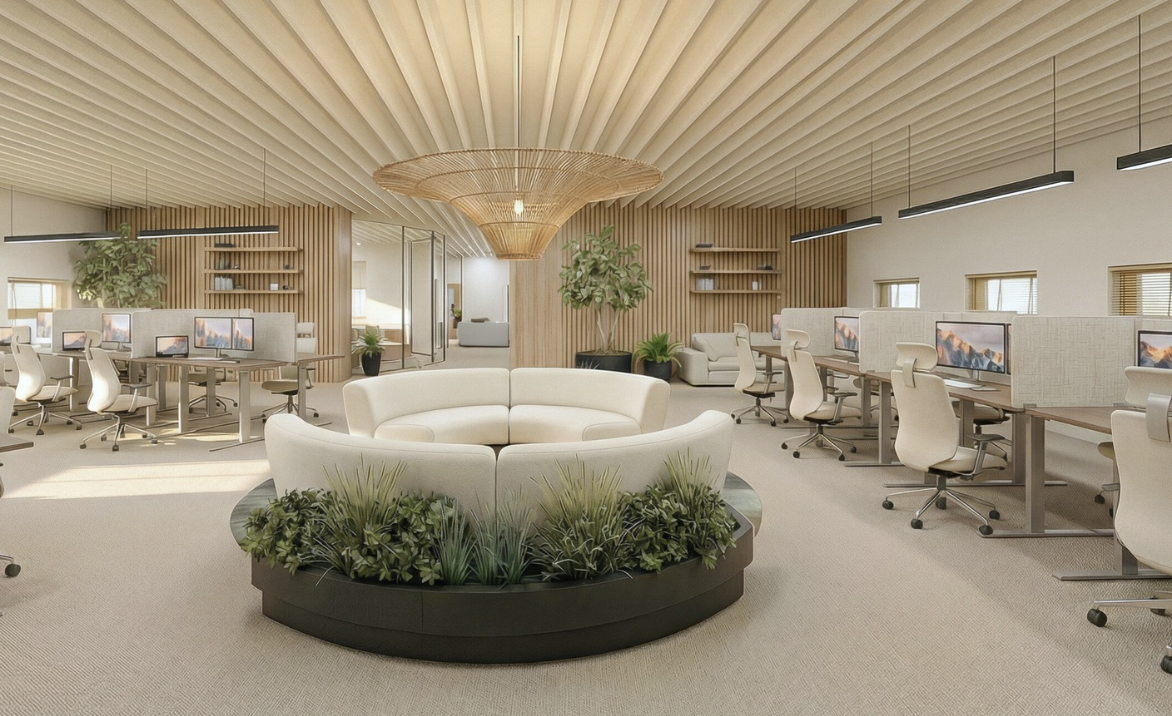
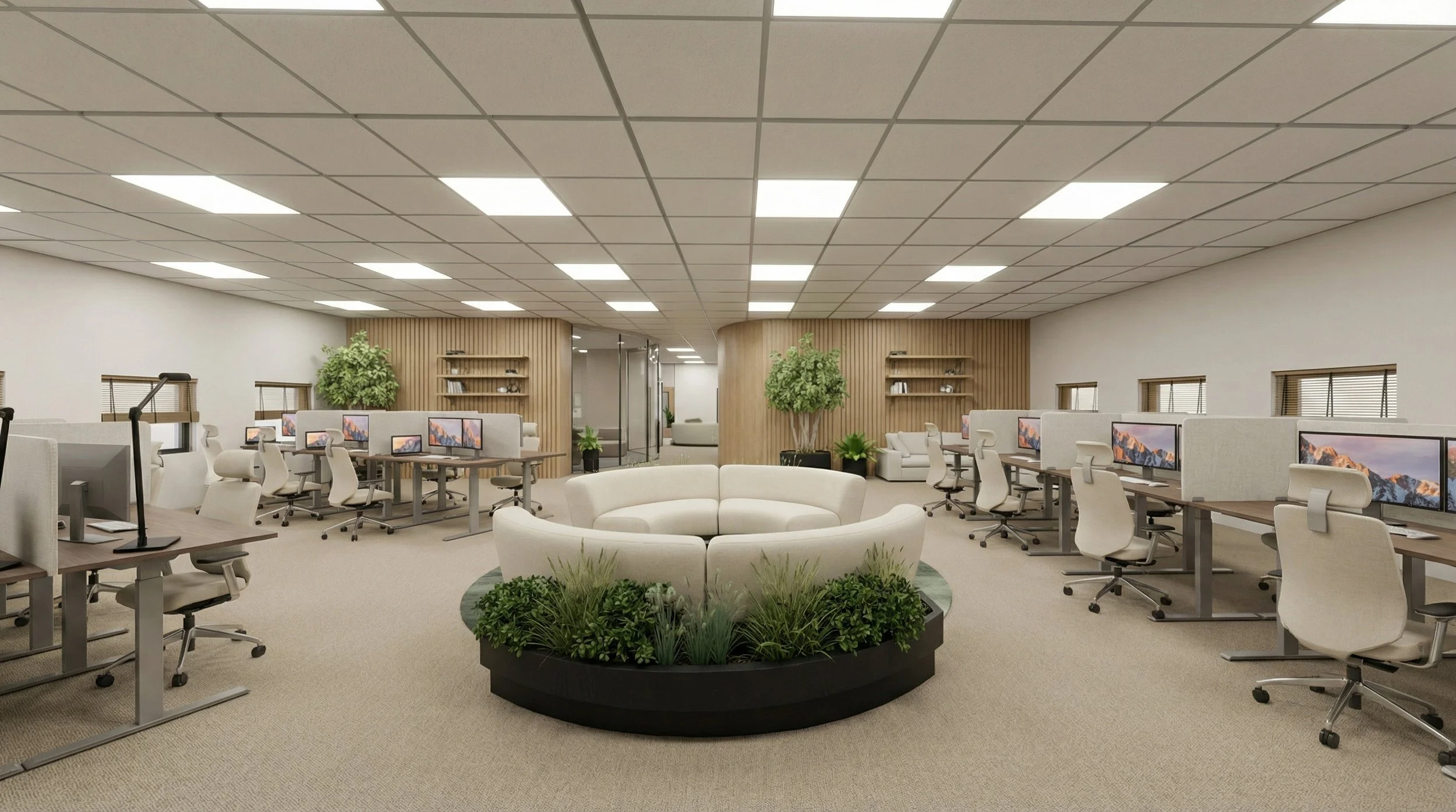
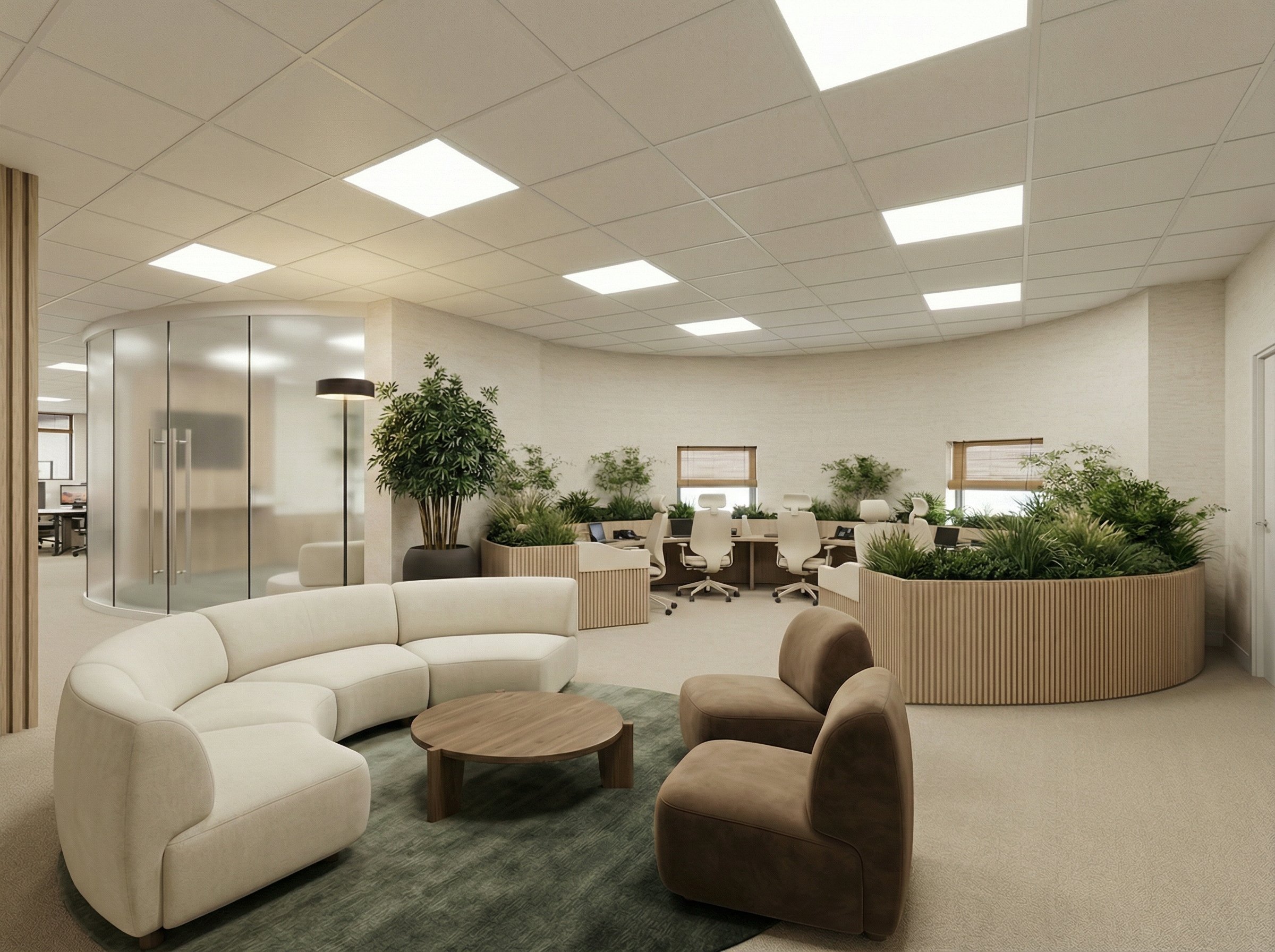
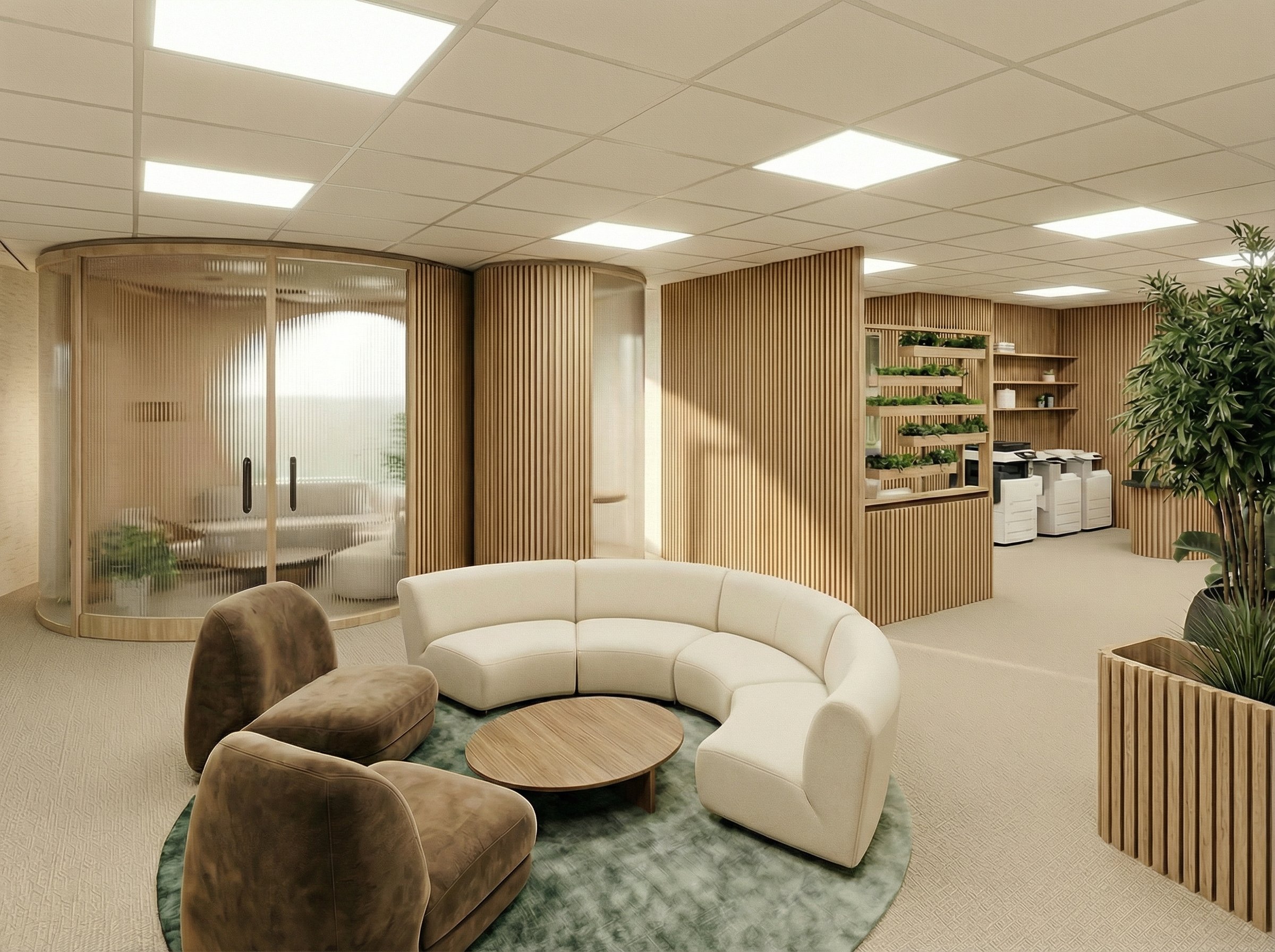
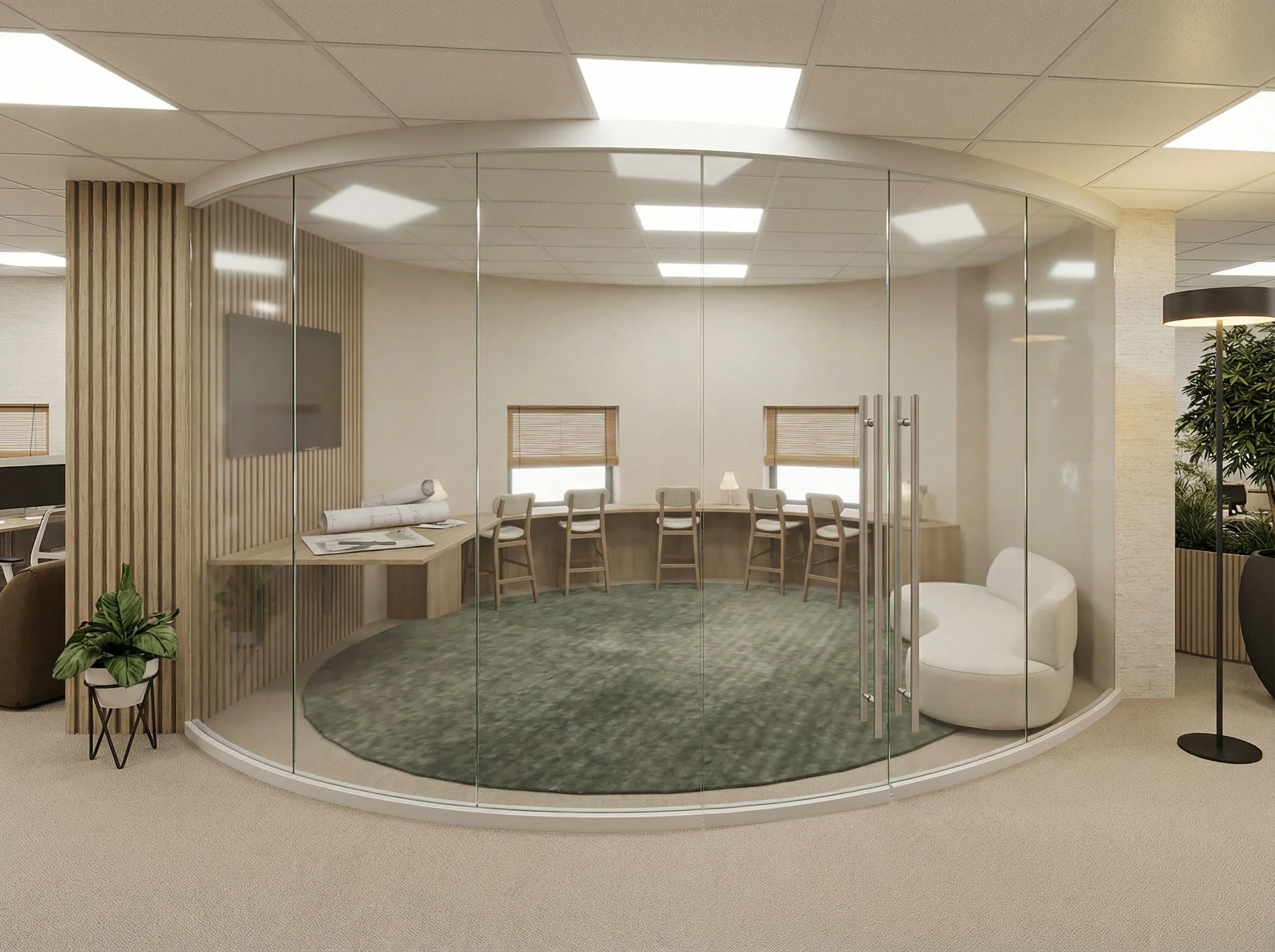
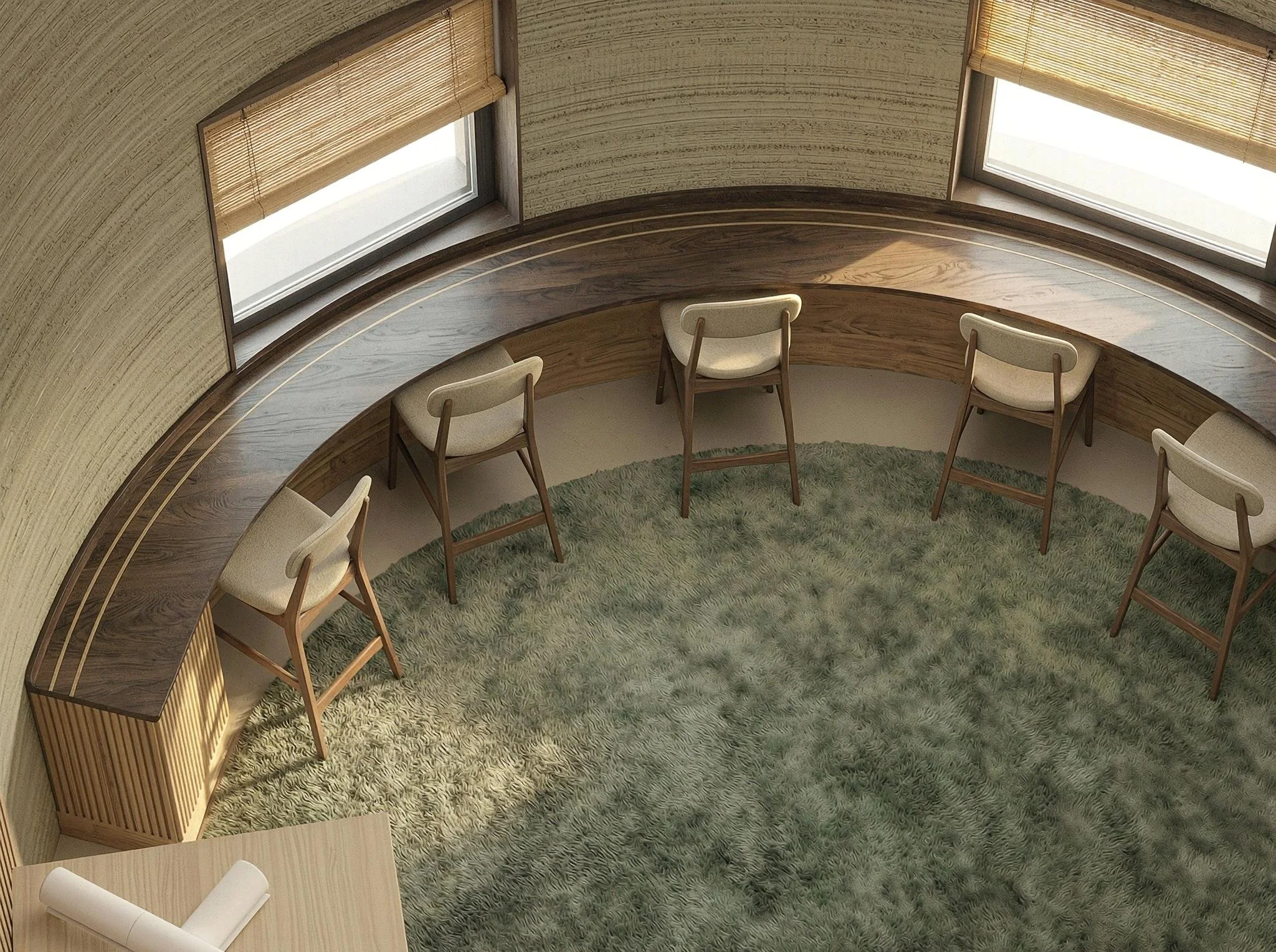
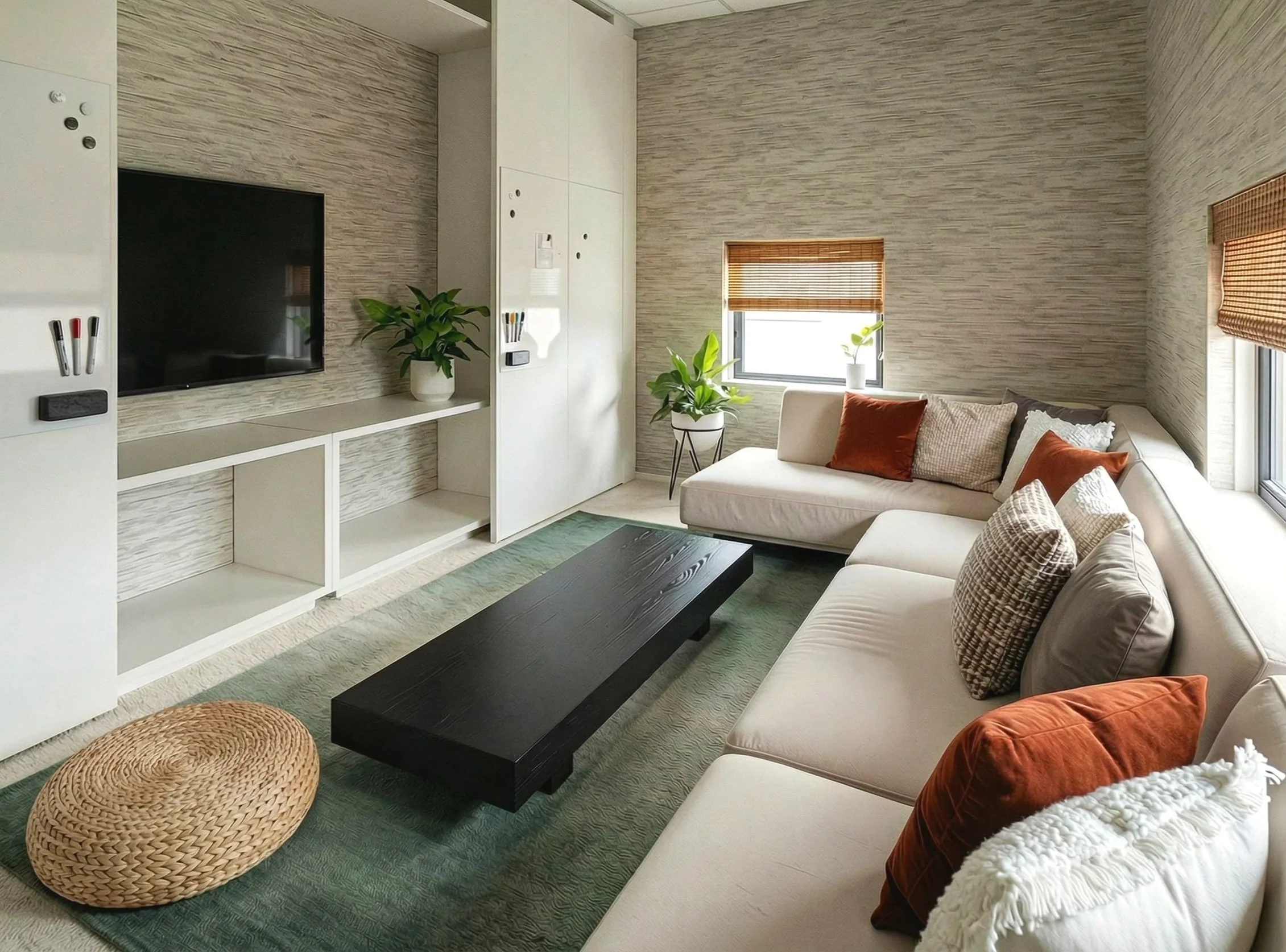
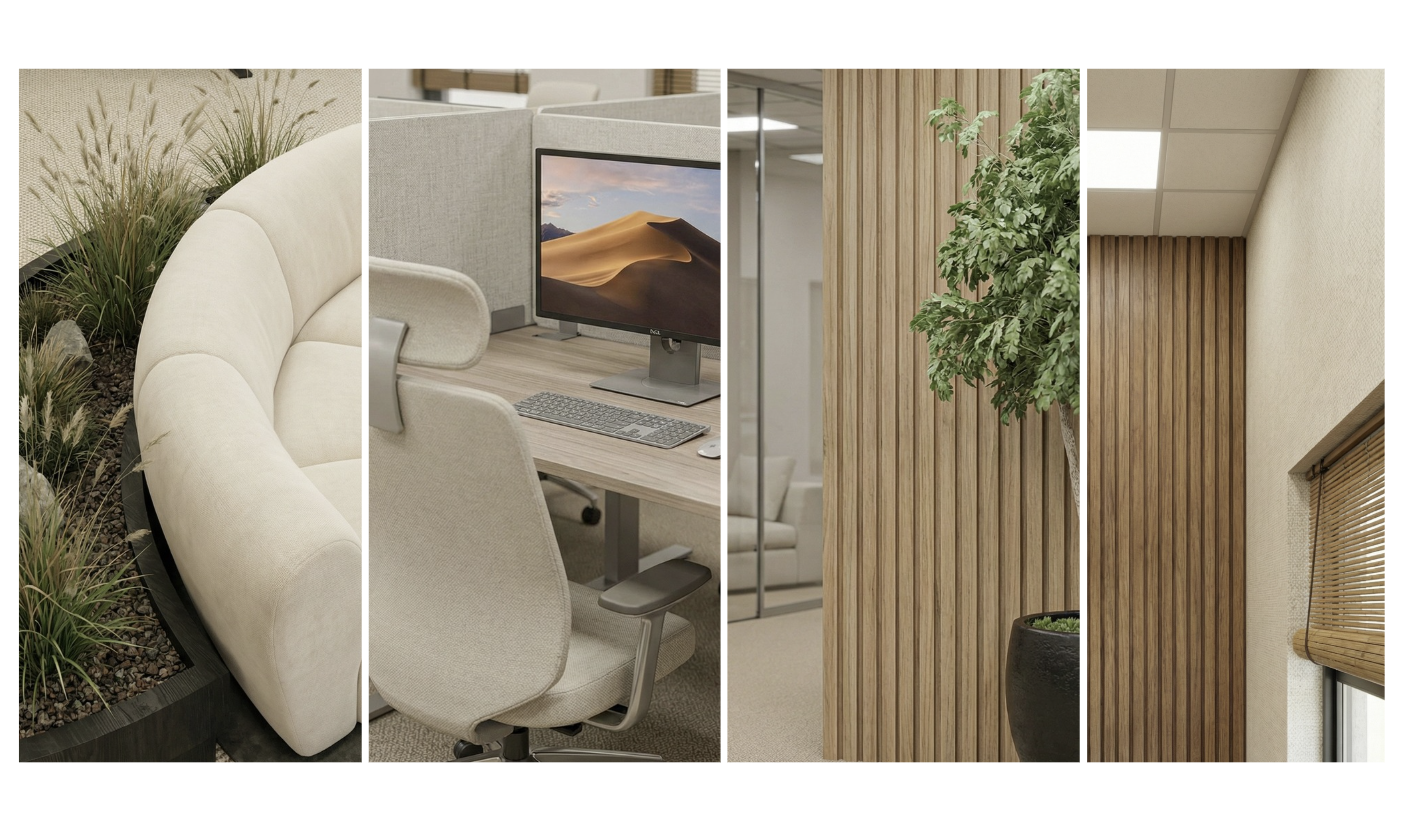
This project explores the design of a commercial workspace environment as part of my Masters in interior Design, investigating sustainable, wellbeing-centred interior architecture and design environments. it was important to understand how this workplace could better support the psychological, emotional, and functional needs of the client’s organisation while aligning with sustainable design principles and the consideration of the teams needs.
To achieve this, a series of research and analysis activities were undertaken to gain a deep understanding of both the client’s requirements and the existing site conditions. These activities included detailed client interviews, site questionnaires, stakeholder discussions, sensory mapping, spatial flow analysis, and behavioural observations. This was then translated into a design strategy that enhanced productivity, supported diverse working modes, and improved overall user wellbeing within the commercial workspace.
The Result:
The research produced a comprehensive understanding of the client’s needs and the opportunities. Site questionnaires and interviews revealed key challenges related to workflow, culture, and current environmental triggers. Sensory mapping identified varying levels of noise, light, temperature, and tactile qualities across the space, highlighting areas prone to sensory overload and areas with potential to become restorative zones. Key considerations were also taken into account exploring neurodiverse
Spatial flow and behavioural observations showed patterns of movement, congestion points, and zones that were under-utilised. These findings helped clarify where improvements to support better circulation, focus work, collaboration, and wellbeing. Stakeholder feedback sessions confirmed the need for adaptable spaces, improved acoustic control, and more balanced sensory conditions.